
Key Points
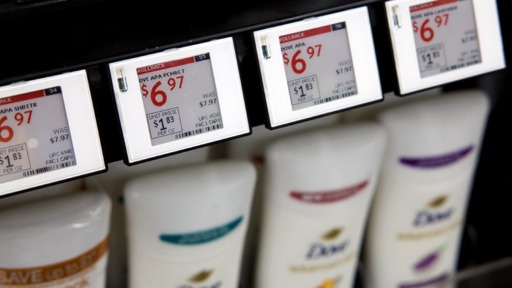
Walmart is rolling out digital shelf labels and expects the technology to be in all U.S. stores by year’s end. Kroger also has begun experimenting with the technology.
The nation’s largest retailer says the digital price tags help associates do their jobs better and stresses that prices on items will be exactly the same for every consumer in every store.
Some legislators are wary of the technology’s potential to be used in dynamic pricing models that disadvantage consumers, with Sens. Jeff Merkley (D-Ore.) and Ben Ray Luján (D-N.M.) introducing a bill to ban it.
Dynamic pricing is not legal in Canada, but what our Real Canadian Super Store does on some items is set the price super high, then every day you go in it is a different “sale” price. On a specific soymilk the price ranges from 3.50 to 9.00.
Insidious. Damn.
Dynamic pricing is only part of it. When you are anticipating higher persistent inflation this makes it easier to tick prices up daily. Enjoy your Trump cost of living adjustments! Lol.
It makes good business sense to do this, especially in a huge store like Walmart, with thousands of SKUs. It will be faster and more accurate, and you might even get to fire a few people. That’s always fun.
The problem is that Walmart does everything in bad faith, so you just know they are going to use it for surge pricing. Get ready to see things like beer prices going up on the weekends.
I completely understand the retailer’s desire for electronic shelf tags, and it doesn’t have to be nefarious of the store taking advantage of customers.
Way back in my youth when I worked retail, keeping shelf tags up-to-date was multiple-peoples full time jobs. This is was for a whole bunch of reasons.
The obvious:
- prices go up
- prices go down
The not so obvious:
- new products come in that don’t have an existing tag so one needs to be created
- products are out-of-stock and will not be replenished, so someone has to go to that shelf and pull that tag off
- promotions have some stock moved from its normal shelf location to an end cap or otherwise special display in a store so more tags needed for the same amount of product
- shelf space being utilized differently such as more product being oriented vertically where before it was horizontal so more tags needed for the same product
- patrons steal shelf tags (who knows why), but it means a new tag must be printed and deployed to the shelf
What’s more, if a shelf tag isn’t updated and the price rings up higher at the register, many retailers will honor the shelf tag listed price so there is a financial loss to the store from poorly maintained shelf tags. I am not surprised at all that it is cheaper for the retailer to buy and implement an entire electronic shelf tag solution over paper tags and labor.
This kind of stuff is inevitable with capitalism, in their continuing effort to make human workers obsolete and save money it makes perfect sense to replace static paper displays with digital ones. I would assume the only reason they didn’t do it any soon is the up front costs.
Dynamic pricing is of course a real concern, but its not like you can’t do dynamic pricing with paper labels, it just takes more effort (and so the prices will probably reflect that as they change). It’s neat how we call it “dynamic pricing” now. but like when it happens in other places its called Hyperinflation, are there still some people foolish enough to think “dynamic” means it could go down also?
…what? How would dynamic pricing be done with paper labels? Have someone stand there, and switch out labels as new people approach?
Typically they’d just use a price gun like this:

Dynamic pricing doesn’t mean individualized pricing per person, it just means deciding to set higher prices in the locations in poor parts of town, setting prices for things like meat and fresh produce at the start of the day or week, the frequency really doesn’t matter you could set prices hourly if you wanted to dedicate an employee or 2 to it.
I’ve been doing dynamic pricing in Walmart for years. I go in ready to pay for stuff but end up walking out with meat in my pants. The prices become free while I’m in the store

