

cross-posted from: https://mander.xyz/post/56159234
Op-ed by Reza Hasmath, Professor in Political Science, University of Alberta, Canada.
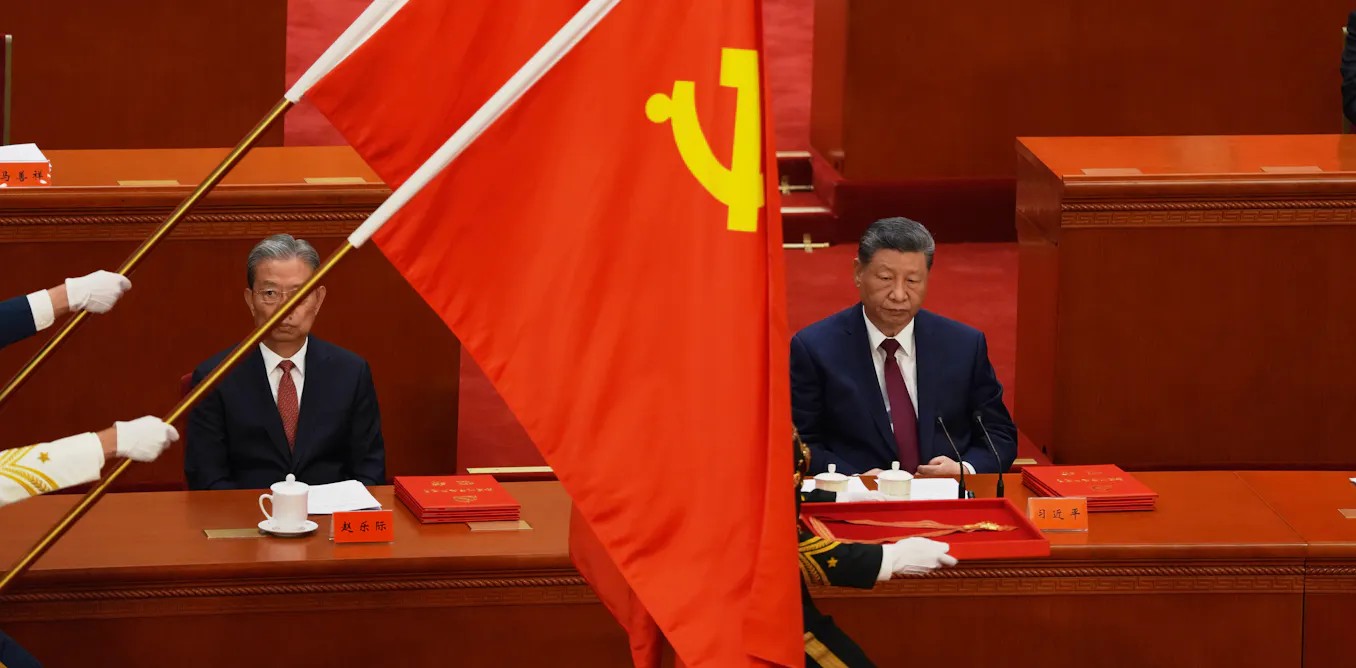
On July 1, China brought into force its Law on Promoting Ethnic Unity and Progress, converting a decade of Xi Jinping’s doctrine of “forging a strong sense of community for the Chinese nation” into binding law.
Most attention has gone to its domestic machinery: entrenching Mandarin over minority languages, unified state textbooks and “inter-embedded” neighbourhoods engineered to dilute concentrations of Uyghurs and Tibetans among the Han majority. In other words, this is an assimilationist project that’s already far advanced.
The provision that matters most to the world outside China is buried near the end. Article 63 declares that organizations and individuals outside Chinese territory who “undermine ethnic unity” or “create ethnic division” shall be pursued for legal liability.
The Chinese government is therefore asserting, in statute, that its authority follows its critics across oceans into other countries, including Canada, home to some of the world’s largest Chinese, Uyghur and Tibetan diaspora communities. The danger is not that the law reaches across borders. It is what it criminalizes, whom it targets and how it’s enforced.
…
The intimidation inherent in the new law already violates many domestic harassment and foreign interference laws in jurisdictions around the world. Prosecutors, here, should use them against the agents carrying out the coercion, not the exiles who are its victims.
Governments should shut the unlicensed “police stations,” and press Interpol to reject politically motivated notices aimed at diaspora activists.
Governments can also build dedicated channels for those targeted: a clear law enforcement contact, protective guidance for Chinese and minority diaspora communities and training for officers who could mistake transnational repression for an ordinary domestic dispute.
Finally, asylum systems should treat Article 63 as evidence: a statute in which China announces that diaspora advocacy invites retaliation is close to proof of persecution for those seeking to flee.
China has every right to legislate for its own territory and citizens. What it cannot legitimately do, however warmly it speaks of unity, is disregard borders. The task for all nations, Canada included, is to insist, in law and in practice, that borders still exist.
…
Here is an English translation of China’s Ethnic Unity and Progress Law, passed on March 12, 2026.
Most relevant to the article is Article 63:
So it effectively extends Chinese law to foreign countries.
You’ll find numerous reports and statements published by non-U.S. media outlets, legal scholars, human rights organizations, and other experts from around the world.
Edit: Btw, the article is written by a Canadian researcher.
Thanks for the resource friend. 😀
So I read through about half of it and skimmed the rest. Idk I guess the most problematic thing I found was this.
The rest of it reads like this
So as far as I can gather the only thing is they’re making the official state language Mandarin and expecting minorities to be functional in Mandarin in order to deal with the state. And yeah that’s certainly not a great position for a government to take. The rest of it reads like “we want all ethnicities to get along and be respected within the family of China”