

4·
16 hours agopro tipp: Much easier and quicker to buy flex tickets from https://oebb.at/ (the national railways of Austria), they have a much nicer web site.
pro tipp: Much easier and quicker to buy flex tickets from https://oebb.at/ (the national railways of Austria), they have a much nicer web site.
With that logic 2-3 billion (or more) will die
From not flying?
hydrogen
You’d pay 1000 Euro to fly from Frankfurt to Munich?
There are ways of life that simply don’t work in a sustainable way.
Nobody has the right to leave a scorched Earth to later generations. The limits of personal freedom are where what is done affects the essential rights of others.
If I remember correctly, to achieve any effective climate protection, we need to fly way less anyways.
Under this angle, a few airports for short distances and airlines going bust is not really that bad, is it?
And I guess its only the beginning of a bigger reshuffle as we enter an age with less fossil energy use…
EVs also act as a kind of catalyst to electrification. Home solar becomes really interesting with EVs and leads to more heat pump use, too.
Also, short- and medium distance cargo transport are becoming electric, and I hope agriculture follows, too, which would be huge.
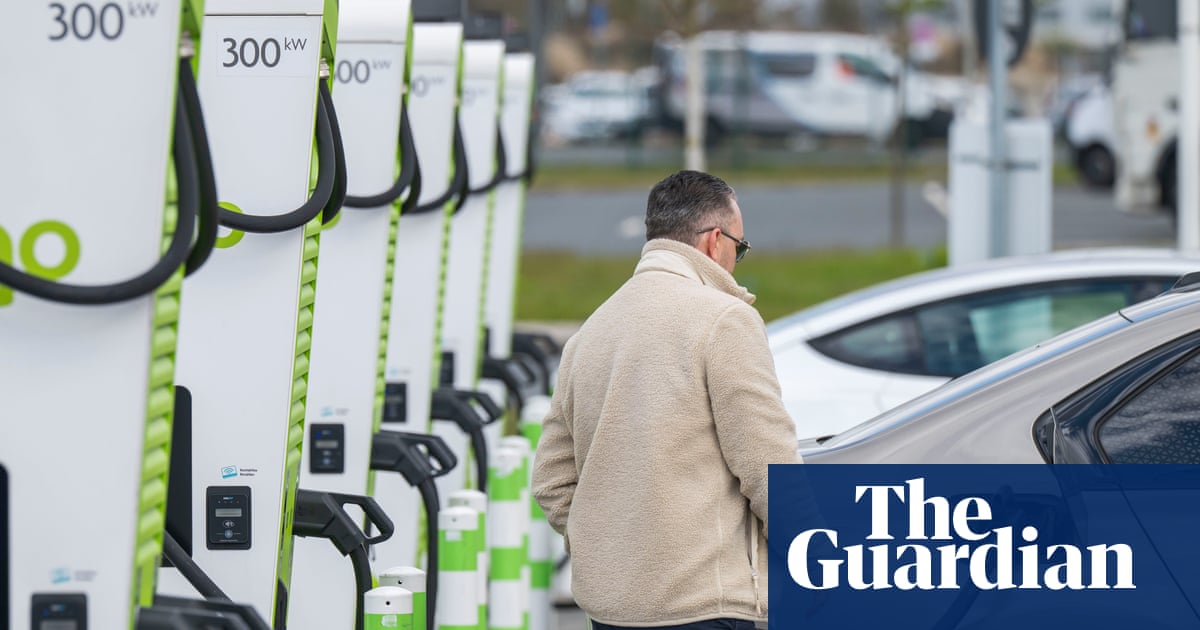
France has created a social leasing scheme for households with income of less than €16,300 a person who have to commute at least 15km (9.3 miles) to work, making the switch attractive in rural areas.
Well done! And much better than subsidizing cars in general.

I note that even job offers are written by AI. Every advertisement for, say, embedded developers, seems to use the same generic keywords and interfaces, sprinkled in with words that sound good (like “platform thinking”) but just don’t make sense.
Also, it seems the total amount of available oil and gas is going to shrink and we should plan accordingly.
This is likely now.
Here is an article about earlier estimates when the oil production was going to peak, due to resource depletion and rising costs:
https://en.wikipedia.org/wiki/Predicting_the_timing_of_peak_oil
We are or were anyway very close to that point. One central fact for what follows is that the large and cheaply to exploit oil fields were discovered first, exploited first, and also last much longer. New oil fields are much smaller, more remote or deep under the sea, need higher costs for development, have a much smaller ratio of energy-invested-on-energy-returned, and have a shorter life time. This already creates a kind of economic cliff.
Now, there are several new factors which all will accelerate the decline of oil:
Another factor that might happen by the way is that the reduction of shipping as a result of lacking oil in South Asian waters - and of reduced economic activity, will likely lower the albedo over this sea regions, which could make the effects of global heating there much more acute. (This nexus is not yet 100% scientifically assured but the most likely explanation for the rise of extreme weather in the Mediterranean). And specifically South Asia which has not only very hot but regionally also extremely humid weather is very vulnerable to heat waves. Adding to that that some electricity there is still produced by oil generators, and failure of electric grids during heat waves is a catastrophic danger. If that happens, this is likely to change the way many people there think about climate change, and will put more pressure on governments to do something about it.
Oil will of course still be used in the future, but in much less quantity, and more as an expensive, environmentally highly damaging, special chemical product that is a necessary evil for some purposes.
Ridiculously expensive when you compare to the prices of balcony solar systems which are just plugged intoa wall socket.
What is the best recent bike-friendly measure that happened in your city?
In my city, some bike lanes were replaced by bike streets, which go along a river, for example, or a commuter train line. These are made in a way that it is easy to cross car streets, but cars can’t pass through them. There is now a lot of bike traffic, and the bike streets and cycleways are starting to form a protected bike network.
You know that apparent law of the universe, which is that when you solve one big ugly problem, you get one or two nicer problems as a reward? Our city has now dense bike traffic at times, and sometimes almost bike traffic jams…
Though heat pumps are still quite expensive in Germany. An installation for a single-family home including solar panels and battery can easily cost North of 30,000 EUR, which is up to three times the cost of the hardware. In theory, it should be a gigantic business opportunity to provide heat pump installation services there from Danish, Netherlands, or Polish companies.
In Germany, we have such manipulators in government. The former Greens-Social Democratic coalition made a law change to foster installation of heat pumps, and phasing out new gas heating installations. It would also give a rising share of energy costs to landlords which keep using antiquated fossil energy to avoid the investment, thereby making life easier for people who rent flats. The goverments would also subsidize upgrades to heat pumps with cheap credits from KfW, and generous grandfathering clauses for elderly home owners.
That was met with a massive disinformation campaign by the conservatives, the yellow press, the far right, and so on. All working purely for the interests of the fossil industry.
And that campaign was also probably one of the main reasons why the Greens/Social Democrat coalition lost the last election to a party of Trump ass lickers.
The fossil industry is an enemy of mankind, and an enemy of European democracy.
Lmao, “Earnings Alert”… seriously?
When something becomes unsustainable, it is possible that prices go up, but at the same time costs rise so high that companies can’t make profits even with high prices.
This is the essence of the “peak oil” scenario: Prices rise, but due to resource depletion, production costs go up so much that demand shrinks. Historically, that’s pretty much inevitable, since oil and gas are finite resources. This downturn had already started.
The war has accelerated that process. The oil economy is not sustainable as a whole. In a way, Trumps Tomahawks and Irans missiles are part of the production costs, as are US aircraft carriers. This is because the oil economy is not only a industrial-economic process, but also a military-political system, which even influences global finance, interest levels etc. It is not a given that the earnings pay this expensive system.
We can say that this system is in crisis.
This also extends to producers of fertilizers: Rising market prices for oil and has means they have to pay more for their most important input, while fewer customers will be able to afford much higher prices for their product. Thus, their business becomes less profitable. In difference to oil producers e.g. in Russia, they do not have windfall profits.
Still, people need food. It will be interesting how the world solves that challenge. One way could be to eat less meat, which is a very wasteful way to produce food. Cheap animal food crops might be replaced with crops for feeding people.
Yet another reason why we need to stop burning oil. Do we need more?
Cars are also great and super flexible, but cities should be designed in a way you can get easily from one to another by car, bus or train without needing to drive through other cities.
If you look at maps of European cities, they have usually a main railway station right in the center, which is also a central hub for pblic transport.
And yes, “park-and-ride” parking spaces where people who come from the outside by car can leave their thingy and can continue by fast commuter trains do exist. They are not used enough, they should be complemented by city tolls like in New York City, which should be so high that it rarely makes sense to use the car.
Oh, and residential parking spaces in cities should have a minimum walking distance from the home, of at least ten minutes, for anyone who is not actually disabled. That alone would reduce a lot of unnecessary car travel in cities.
Not to say that rural areas don’t need different solutions - they do. But the mayority of people live in cities, here is where we need change first.
Damn. Good that important things like oil futures are safe from this!!
More analysis on Anthropics claims:







Do you think that people can’t move without flying?
Yes. Including arranging one’s life so that you don’t need to fly.