

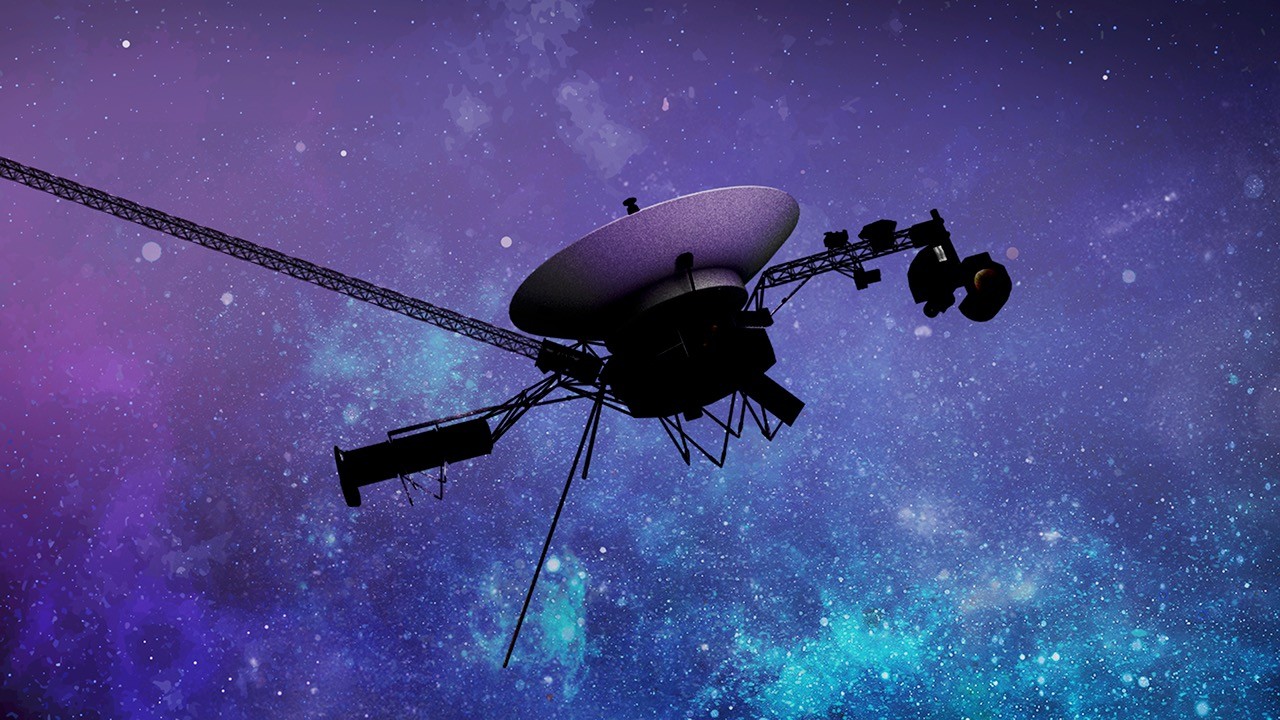
Engineers are confident that shutting down the LECP will give Voyager 1 about a year of breathing room. They are using the time to finalize a more ambitious energy-saving fix for both Voyagers they call “the Big Bang,” which is designed to further extend Voyager operations. The idea is to swap out a group of powered devices all at once — hence the nickname — turning some things off and replacing them with lower-power alternatives to keep the spacecraft warm enough to continue gathering science data.
What a badass little craft to have kept operating for so long. 🫡
Check out AMSAT-OSCAR 7 – Closer to home, but launched in 1974, and still waking up when there’s sun to operate. It’s the oldest “operational” satellite still up there. https://en.wikipedia.org/wiki/AMSAT-OSCAR_7
Fucking A good on ya for the heads up. I somehow haven’t heard of this one.
AMSAT = Amateur Satellite! Holy shit. Amateur, my ass.
It’s a satellite for amateur radio, it’s not implying it’s an amateur satellite.
Oh.
Cool that the Polish opposition used it to get around wire tapping.
A truly beautiful piece of engineering
Why can’t we be as forward thinking as the people who created the voyager probes?

Jesus that is a sobering figure I did not need to see today.
And it’s quite outdated, I think from 2022. It has become much worse since
It actually doesn’t really show much, except maybe that inflation exists and people generally have more money now.
If it’s supposed to show how the rich are getting richer and the poor are getting poorer, it does a lousy job. It’s practically impossible to see the relative change between the groups, since the lower two graphs’ behaviors are impossible to see. The only thing that can at least somewhat be seen is that the top 10% and the top 1% grow quite correspondingly.
So, basically that graph shows that everything seems to be as fair as it has always been. Probably wasn’t the intention, and certainly not a good representation of what’s happening. It’s very possible that the top 1% is included also in the top 10% and dominates it, but just based on that graph it’s impossible to know.
Now please show an inflation adjusted graph or better one that shows in percentage how much each fraction owns of the wealth pie.
There is no way that disparity is that close.
The chart is at about 1.5% of the way from displaying a billionaire, with Muskrat being 800,000 times higher than the top of this chart. The 1% are not the problem, they are one in a hundred. The practically unbounded wealth of a handful of people above this chart is our problem, the world’s problem, humanity’s problem.
Voyager 1 was launched in 1977 - just before the Reagan era. Coincidence?
Also, and I’m still just guessing here, it’s probably the culmination of the space race to the moon minus the pressure to be there before the Russians.
In other words, NASA’s Golden Age.
Also, the tech was “just right” then. Small and frugal enough to fit on a probe but still robust enough to survive more than a few years in space.
Relatedly, For All Mankind makes me sad since in that universe, the space race is still on.
not enough engineers use LSD anymore because they’ll lose their entire career over it and be blacklisted from government contracts forever.
the McCarthys won.
It’s not profitable
RTGs are subject to the issue of half-life - this is a consequence of that type of power source. Though, let’s be honest: we do not have any other sort of power generation technology that would be viable for literal decades on an interstellar space probe. And we definitely didn’t have a better alternative when they were launched.
For roughly three milliseconds I thought to myself they shoulda used solar panels instead.
“Oh, wait…”
Well they could power a lamp that shines on the solar panels.

This photo was taken after Voyager was launched, NASA didn’t have the technology yet
Use the heat from the lamp to boil some water and you’re in business.
Just use two of them!
NASA’s Voyager engineers are like the final evolution of your uncle that keeps his 1974 Chevy C/K running at 400,000 miles. It’s the same autism across an ocean of resources.
Actually basically yes. NASA has had decades of practice at minimum viable operation capability, making their spacecraft and rovers all but drag themselves along even when anything else would stop working.

It is amazing they can detect and communicate to something with such a weak signal so far away.
So far away that it takes an entire day to get the signal to it. The earth to the sun is 8 minutes.
And somehow we can still talk to it. It’s amazing.
About 1/3 of a % of a lightyear that’s hardcore that we’ve gotten something out that far.
It also gives you an idea of how big space is. Lots and lots of nothing.
This, coupled with the improbable idea that it could be “found” someday, has got to be one of the most exciting and magical concepts in science ever
1-2 day ETA for an interstellar telegram lol
I was actually looking into this a little bit recently and it turns out the Voyager spacecraft launched with 23 watt radio transmitters but at the distance it takes a 72 meter dish to capture the signal and at its capture it is one attowatt. I don’t remember my system right offhand, but it’s something like a billionth of a billionth of a watt. It’s stupidly small.
Only 49 years!
Enshitification.
Doesn’t even run Outlook, let alone two. Pathetic.
At least they got that part right. It runs Pine.
Mutt was too much.
This is so fuking cool
I am filled with pride that we collectively made something that will likely out live our sun, and we continue to find ingenious ways to keep it going and going
What a cool time to be alive
I remember when both Voyagers were making their fly bys. We’d get a bunch of images in magazines and stuff, and then wait several more years for the next planet. Between that and the Space Shuttle flights it was awesome.
I wasn’t around for the moon landings so Skylab and Voyager were the highlights of my days.
It’s quite a feat of engineering to have something run this long - and without having physical access to it.
Here are Images Voyager Took.
I have no idea how to sort them by recency; I’m guessing it’s not sending such expensive data anymore, but what are the most recent (and furthest) images?
which would shut down components on its own to safeguard the probe, requiring recovery by the flight team — a lengthy process that carries its own risks.
Uhhh… how the fuck are you planning on recovering it?
Really long stick
New Hobby unlocked: Skyfishing
I think what they mean is that if the thing starts shutting stuff down on its own, the process to get those things started again is tedious. While if the humans tell it to shut things down, it is all more orderly.
Jumper cables.
Makes me wonder how the jumper cables guy is doing.
That bit confused me as well. I’m thinking in case the launch and deployment failed, they could get it back much more easily
This thing launched 50 years ago, it and it’s sister probe are farther from earth than anything else by multiple orders of magnitude, they’re literally outside the sun’s influence. We obviously aren’t getting them back so recovery must mean recovery to an operational state
It’s bound to get bored out there, miss us all so much, and turn around at some point, like my dad. Just give it time.
Hahaha I said the same thing
When is the next conjunction of planets that enabled the Voyager missions happening and are we preparing for it?
The Voyager mission launched in 1977. If I recall correctly, it takes roughly 80 years for the planets to realign for that purpose. If I didn’t misremember, we’re about halfway through waiting.
1977…
Roughly 80 years
If I didn’t misremember, we’re about halfway through waiting.
A bit more than halfway, although sometimes I am shocked by how long ago 1977 was. Wasn’t it just, like, 30 years ago or so?
It can’t possibly be 49 years ago, can it?
2026 is to 1977 like 1977 is to 1928. 🫣
2026:1985 = 1985:1944
:(
1985 is your birth year or where does that come in?
Yep. I was just applying the same calculation to my birth year. I’m practically a WWII vet. :(
Tick tock, unfortunately.
The clock ran out years ago. They have been building bridges to New clocks for decades. But yes. Soon it will die, only propelled forward into nothingness and loneliness forever.
Only delusion separates us from the same

Thanks for the uplifting news!